Can Dental Implants Replace Multiple Missing Teeth?
@connerfjof576
October 28, 2026 · 15 min read
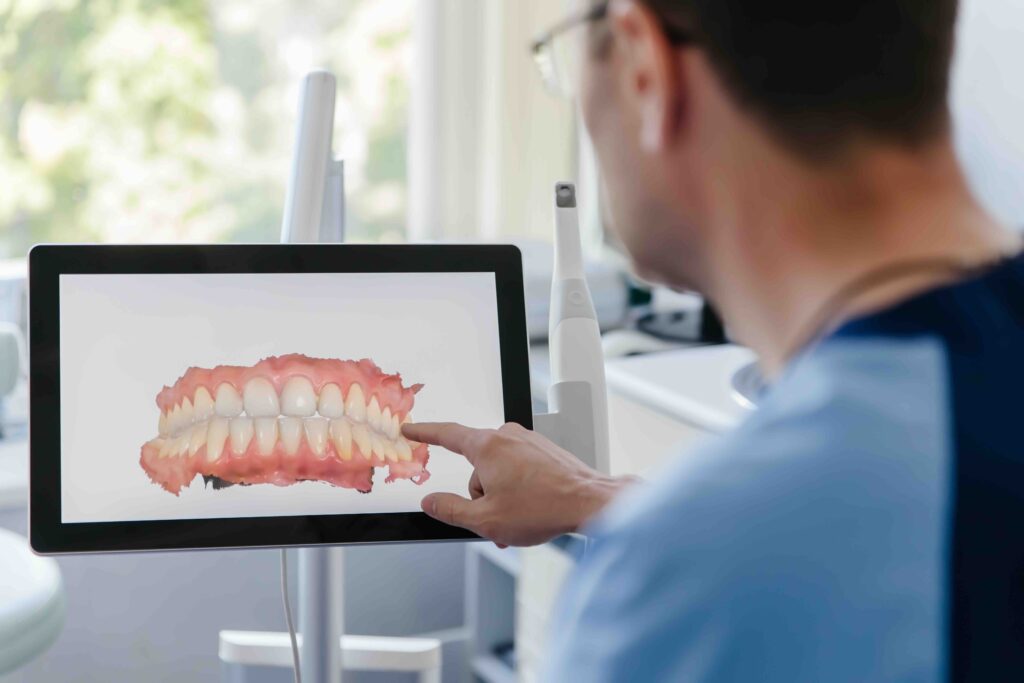
Losing more than one tooth changes more than a smile. It affects the way food is chewed, how words sound, how the jaw is supported, and often how confident a person feels in ordinary conversations. When several teeth are missing, the question usually becomes less about appearance alone and more about function, comfort, and durability. Many patients ask whether Dental Implants can realistically replace multiple missing teeth, or whether implants are only practical for a single gap.
The short answer is yes, they often can. In many cases, Dental Implants are one of the most reliable ways to replace several missing teeth. The better answer, and the one that matters in a treatment room, is that the right solution depends on where the teeth are missing, how much bone remains, how the bite comes together, general health, budget, and expectations for maintenance. Replacing three missing teeth in a row is a very different problem from replacing Dental Implants all upper teeth in someone who has worn a denture for 20 years.
That distinction matters because implants are not a single product or one-size-fits-all treatment. They are a category of treatment that can be adapted in several ways.
What implants are actually doing
A Dental Implant acts as an artificial tooth root. It is usually a small titanium post, though other materials are sometimes used, placed into the jawbone where a natural tooth root once sat. After healing, the implant supports a crown, bridge, or denture.
That root-level support is what makes implants different from a traditional bridge or removable denture. A conventional bridge uses neighboring teeth as anchors. A removable partial denture rests partly on the gums and often clasps onto natural teeth. An implant, by contrast, transfers force into the bone itself. That can help preserve bone levels and provide a firmer, more natural feel when biting.
When multiple teeth are missing, implants can replace them in more than one way. You do not necessarily need one implant for every missing tooth. This surprises many people, but it is a routine part of sound treatment planning.
Several missing teeth do not always require several separate implants
One of the most common clinical situations is a patient missing two, three, or four teeth in a row. If the bone quality is good and the spacing is favorable, a dentist or oral surgeon may place two implants and use them to support a three-tooth or four-tooth bridge. That avoids placing an implant in every site while still giving fixed support.
For example, if a person lost the lower first molar, second premolar, and first premolar years ago, it may be possible to place one implant near the front of the space and another toward the back, then connect them with a custom bridge. The exact layout depends on bite forces, the width of available bone, and whether the patient clenches or grinds. In a lighter bite with good spacing, that design may function very well for many years.
The same principle can be expanded for a full arch. Someone missing all upper teeth does not usually receive fourteen individual implants. More commonly, a full upper bridge may be supported by four to six implants, sometimes more depending on anatomy and design goals. A lower full arch often has denser bone and may also be restored on four to six implants, though there are cases where additional implants are preferable.
This is why the question is not simply, “Can implants replace multiple teeth?” It is, “What implant-supported design will best replace these teeth in this mouth?”
The main ways Dental Implants replace multiple missing teeth
There are a few broad treatment patterns that dentists use regularly. These are worth understanding because they shape cost, healing time, and long-term maintenance.
- A single implant with a single crown replaces one missing tooth.
- Two or more implants can support a fixed bridge for several missing teeth in a row.
- A small number of implants can stabilize a removable partial or full denture.
- Four to six or more implants can support a full-arch fixed prosthesis when all teeth in an arch are missing.
That range gives implants unusual flexibility. A patient who has lost back chewing teeth on one side has very different needs from someone whose lower denture lifts every time they speak. Implants can be tailored to both situations, but not with the same design.
When implants are an especially strong option
Implants are often ideal when the neighboring teeth are healthy and untouched. If a patient is missing three teeth and the teeth on either side are intact, placing implants can avoid cutting down those healthy teeth for a traditional bridge. From a conservative dental perspective, that is often a major advantage.
They also shine when chewing stability matters. Back teeth take heavy loads. A removable partial denture can restore some chewing ability, but many patients never feel fully secure with it, especially with sticky or dense foods. Implant-supported restorations usually feel firmer. Patients often report that they stop “testing” their teeth before every bite and simply eat normally again.
Another good indication is recurrent failure of removable appliances. A patient who has had multiple relines, clasp adjustments, sore spots, or fractured dentures may be tired of managing the hardware rather than enjoying the result. Even two well-placed implants under a lower denture can transform day-to-day comfort. That is not marketing language, it is a practical observation many restorative dentists hear again and again. Lower dentures are especially prone to movement because the lower ridge tends to shrink over time and the tongue constantly destabilizes the appliance. Implant support changes that equation.
Cases where the answer is yes, but with conditions
Sometimes implants can replace multiple missing teeth, but only after groundwork is done. Bone loss is the most common obstacle.
When a tooth has been missing for years, the bone in that area often shrinks in width and height. In the upper back jaw, the sinus may enlarge downward into the space, leaving limited bone for implant placement. In the lower back jaw, the inferior alveolar nerve limits available depth. In front teeth areas, the esthetic demands rise sharply because even small gum defects can show when a person smiles.
This does not automatically rule implants out. It may simply mean more planning is needed. Bone grafting, sinus augmentation, ridge preservation, soft tissue grafting, or staged treatment may be recommended. Some patients hear that and assume the case has become too complicated or risky. Often it just means the team is trying to build a healthier foundation rather than forcing an implant into an unfavorable site.
There are also medical conditions that require careful evaluation. Diabetes, smoking, a history of radiation therapy to the jaws, certain medications affecting bone turnover, and untreated periodontal disease can all influence healing and long-term success. None of these factors automatically disqualify a patient, but they may shift the treatment plan. A heavy smoker with advanced bone loss and a history of gum disease may still receive implants, yet the conversation should be more cautious and honest than it would be for a healthy non-smoker with fresh extraction sites and abundant bone.
Replacing a few teeth versus replacing all teeth
These are often spoken about as if they are variations of the same treatment. Clinically, they are not.
Replacing two or three missing teeth in one area is usually more localized. The dentist evaluates the space, bone dimensions, bite force, gum shape, and esthetic zone. The challenge is precision. Each implant has to be positioned so the final teeth are functional, cleanable, and, in visible areas, natural-looking.
Replacing all teeth in an arch is a larger prosthetic and surgical problem. The clinician must consider smile line, lip support, phonetics, vertical dimension, jaw relationship, hygiene access, and how the prosthesis will be repaired if a component chips or loosens. Full-arch implant treatment can produce life-changing stability, but it is not merely “more implants.” It is a different level of planning.
A patient with no upper teeth and a loose denture may be a candidate for an implant-retained overdenture, which snaps into place but is removed for cleaning. Another patient may prefer a fixed full-arch bridge that stays in place and is removed only by the dentist for maintenance visits. Both are implant solutions, but the daily experience and cost are very different.
The role of bone, bite, and hygiene
Three factors quietly determine whether an implant plan is wise: bone support, bite force, and the patient’s ability to keep the area clean.
Bone support is obvious enough. The implant needs enough quality bone to integrate and remain stable under function. But bite force is just as important. A patient who grinds heavily at night puts very different stress on implants than someone with a lighter, well-balanced bite. Natural teeth have a periodontal ligament, which gives slight shock absorption and sensory feedback. Implants do not. That means force management matters. The size of the implant, the number of implants, the way the crowns contact opposing teeth, and whether a night guard is worn can all influence outcome.
Hygiene is often underestimated. A beautifully made implant bridge that is impossible for the patient to clean is not a good restoration. Food traps, inflamed tissue, and peri-implant disease can undo expensive treatment. Experienced restorative dentists usually think beyond placement and ask a simple practical question: can this patient maintain it every day without frustration? If the answer is no, the design should change.
What patients often misunderstand about “permanent”
Patients frequently use the word permanent to mean two different things. Sometimes they mean fixed, as in not removable at home. Sometimes they mean guaranteed to last forever. Those are not the same thing.
Implant-supported teeth can be fixed and still need maintenance. Screws can loosen. Porcelain can chip. Acrylic teeth can wear. Tissue under a bridge still needs cleaning. The implants themselves can remain stable for many years while the prosthetic components need repairs or replacement along the way. This is normal dentistry, not treatment failure.
A good clinical team explains this early. The goal is not to sell a fantasy of zero maintenance. It is to provide a stable, functional replacement plan that is durable and serviceable.
How treatment is usually planned
A proper implant plan for multiple missing teeth starts with records. That often includes a full dental exam, photographs, digital scans or impressions, and 3D imaging such as a CBCT scan. The 3D scan matters because it shows bone shape, nerve location, sinus anatomy, and defects that standard two-dimensional films may miss.
The planning then moves backward from the final teeth, not forward from the bone alone. That means the dentist first considers where the replacement teeth need to be for speech, appearance, and chewing. Implant positions are then chosen to support that outcome. When implant placement is done without enough regard for the final prosthetic design, compromises follow. The bridge may emerge in an awkward location, be difficult to clean, or look bulky.
That prosthetically driven approach is one of the biggest differences between average implant treatment and excellent implant treatment.
Typical benefits when multiple missing teeth are replaced with implants
The advantages are not only cosmetic. They are functional and biological as well.
- Improved chewing stability, especially in the back of the mouth
- Better preservation of jawbone compared with leaving spaces untreated
- No need to prepare adjacent healthy teeth in many cases
- Greater comfort and retention than many removable options
- A restoration that often feels closer to natural teeth in daily use
Not every patient experiences every benefit to the same degree. A person switching from a loose lower denture to a two-implant overdenture may experience dramatic quality-of-life improvement. A person replacing two premolars may notice subtler gains, mainly in chewing balance and confidence.
Trade-offs that deserve honest discussion
Implants are excellent, but they are not automatically the best answer in every case. Cost is the most obvious trade-off. Implant treatment for multiple teeth can be a significant investment, especially when grafting, temporary restorations, sedation, or full-arch prosthetics are involved. Patients deserve transparent estimates and clear staging options.
Treatment time is another factor. In straightforward cases, implants can sometimes be placed at the time of extraction, and temporary teeth may be provided quickly. In other cases, months of healing are required before final restorations are delivered. If a patient has a wedding in eight weeks or a job that depends heavily on public speaking, timing has to be part of the plan.
Surgery is also part of the equation. Even routine implant surgery is still surgery. Most healthy patients handle it well, often with less discomfort than they expected, but swelling, bruising, diet restrictions, and healing appointments are real. Someone with severe dental anxiety may need a very structured approach and sedation options.
Then there is prosthetic maintenance. Implant restorations can be sturdy, but they are not indestructible. A patient who chews ice, grinds heavily, or skips maintenance visits can damage even very well-made work.
A common clinical scenario
Consider a patient in their late fifties missing the upper left first premolar, second premolar, and first molar. The canine and second molar are healthy. A removable partial would likely restore chewing, but it may feel bulky and place visible clasps on neighboring teeth. A traditional bridge might require preparing the canine and second molar, which are sound and unrestored.
In this kind of case, two implants supporting a three-unit bridge may be an elegant answer. The treatment preserves the adjacent teeth, provides fixed support, and often restores chewing confidence on that side. If the sinus has dropped into the molar area, however, the patient may need a sinus lift or a revised implant position. If they grind heavily, the bridge design may need to be stronger and a night guard becomes more important. Same missing teeth, different treatment details based on anatomy and habits.
Now compare that with a patient who has no lower teeth and a denture that floats constantly. For that person, even two implants placed in the front of the lower jaw to retain an overdenture can be transformative. They may finally be able to eat salad, speak without worrying that the denture will lift, and stop using adhesive every morning. Would a fixed full-arch bridge be more luxurious? Possibly. Is it always necessary to solve the core problem? No.
This is where judgment matters. The best treatment is not always the biggest treatment.
How long do implant solutions for multiple teeth last?
No ethical clinician can promise a fixed lifespan, because outcomes depend on maintenance, health, bite forces, material choice, and biology. That said, many implant restorations function successfully for a long time, often well over a decade, and some much longer. The implant itself may outlast the crown or bridge attached to it. In full-arch work, it is not unusual for the support implants to remain sound while the prosthesis needs periodic refurbishment.
The longer view is important. When weighing cost, patients should think not only about the initial bill but about maintenance over ten to fifteen years. A lower-priced removable option may need more frequent remakes, relines, or repairs. An implant option may cost more upfront but offer better stability and fewer day-to-day compromises. There is no universal winner. There is only what makes the most sense for that patient’s anatomy, priorities, and finances.
Questions worth asking before moving forward
If someone is considering Dental Implants for multiple missing teeth, a careful consultation matters more than almost any advertisement or price promotion. A patient should understand whether the recommendation is for individual implants, an implant bridge, an overdenture, or a fixed full-arch prosthesis. They should also understand what happens if a complication occurs and what maintenance will look like after treatment is complete.
A few practical questions often reveal the quality of the plan. Ask how many implants are being Dental Implants proposed and why that number was chosen. Ask whether bone grafting is likely and what problem it is meant to solve. Ask what type of temporary teeth will be available during healing. Ask how the restoration will be cleaned at home and how often it should be checked professionally. These are not minor details. They are the daily reality of living with the result.
The bottom line for most patients
Dental Implants can absolutely replace multiple missing teeth, and in many cases they do so more effectively than traditional alternatives. They can support bridges, stabilize dentures, and restore full arches without requiring one implant for every missing tooth. For the right patient, they provide excellent stability, protect surrounding structures, and restore a more natural chewing experience.
The key is choosing the right implant-supported design rather than assuming every missing tooth needs the same type of replacement. Good treatment planning looks at bone, bite, esthetics, hygiene, health, and budget together. When those pieces are handled thoughtfully, implants can be a dependable way to replace not just one missing tooth, but several, or even an entire arch, with strength and predictability that other options often struggle to match.
Oaks Dental
5000 Parkway Calabasas Suite 308
Calabasas, CA 91302, United States
+1 818-431-2000
FAQ About Dental Implants
What is the downside of a dental implant?
Implants require surgery and a healing period that can last several months. Possible complications include infection, nerve or sinus injury, damage to nearby teeth and failure to bond with bone. Your dentist should assess your health, bone support and alternatives before recommending treatment.
What do dental implants typically cost?
There is no single price for every implant case. The number of teeth replaced, implant components, final restoration and any grafting or extractions affect the total. Request a written estimate covering every stage and confirm insurance benefits and out-of-pocket costs with the practice.
How long do tooth implants last?
An implant can provide long-term support and may last a lifetime with good oral hygiene and regular dental care, but this is not guaranteed. The crown or other restoration may need replacement sooner. Smoking, gum disease and some health conditions can reduce implant success.