Invisalign Calabasas CA for Treating Mild Bite Problems
@connerfjof576
November 24, 2026 · 15 min read
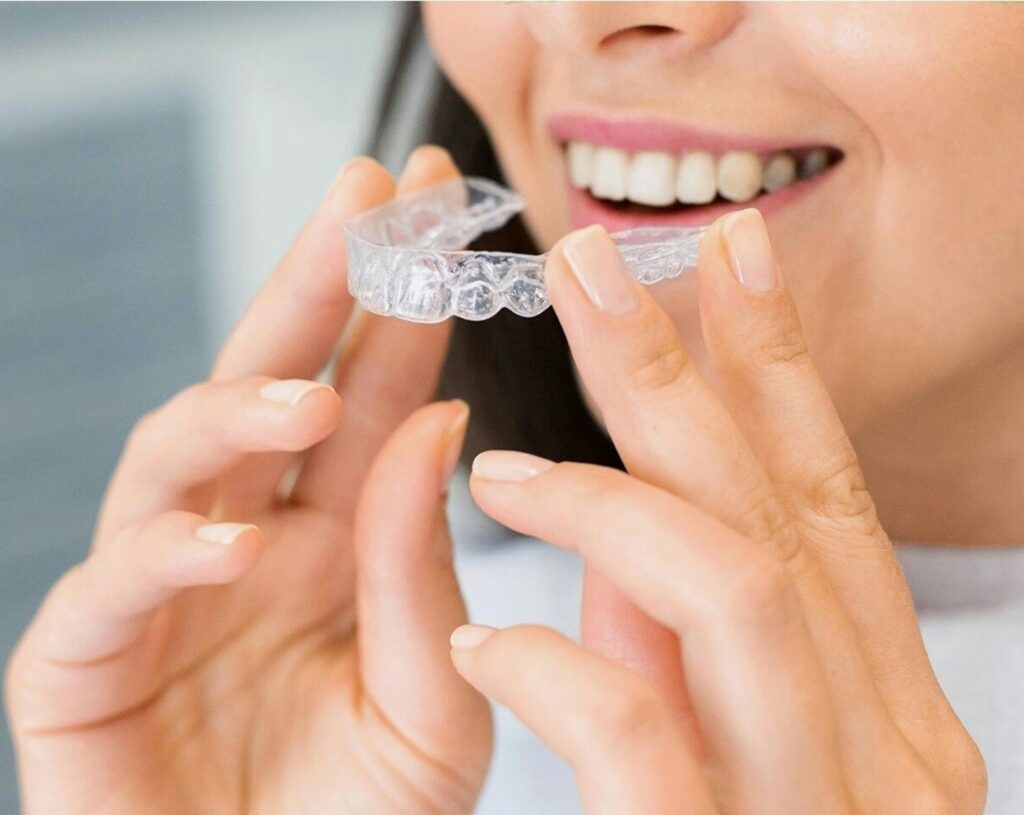
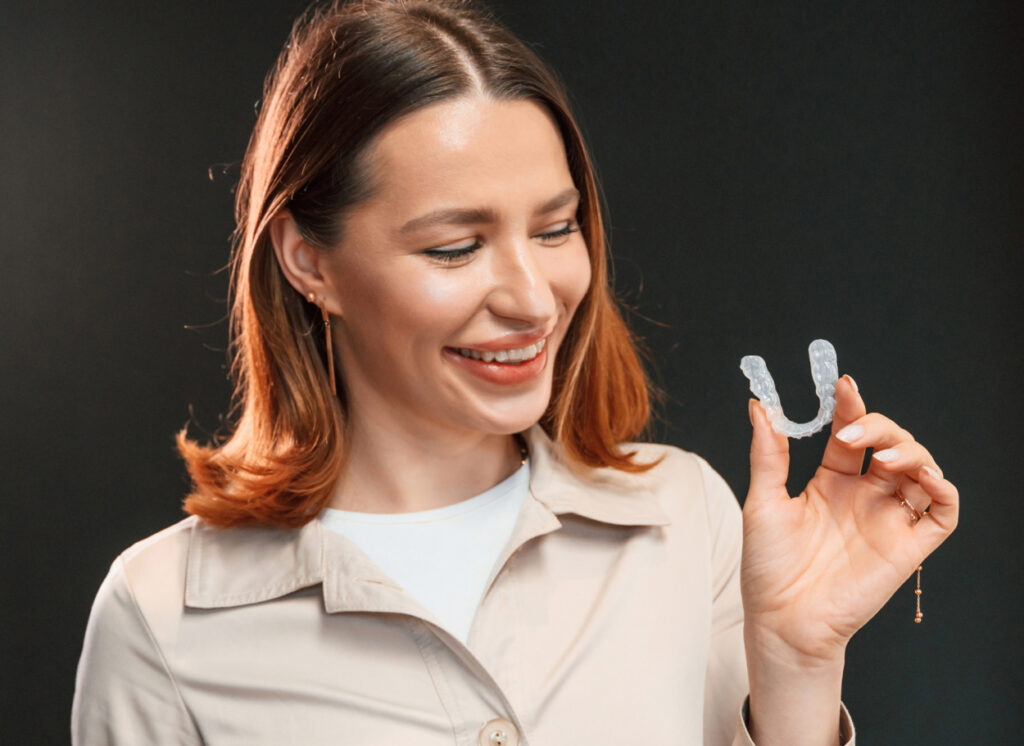
A mild bite problem can seem easy to ignore, especially if your teeth look fairly straight in photos and you are not dealing with obvious pain. Yet even a small mismatch in how the upper and lower teeth meet can affect daily comfort more than people expect. It may show up as uneven tooth wear, a tendency to bite the inside of the cheek, minor jaw fatigue in the morning, or the sense that one side of the mouth does more work than the other. These are not dramatic symptoms, but they matter.
For many adults and teens, the appeal of Invisalign is simple. They want a practical way to correct mild crowding or spacing while also improving bite function, without brackets and wires. In an area like Calabasas, where patients often balance professional visibility, social commitments, and active schedules, discreet treatment has obvious advantages. Still, clear aligners are not a magic answer for every case. The real question is whether Invisalign Calabasas CA is a good fit for mild bite concerns, and what kind of results a patient can realistically expect.
That answer depends on the type of bite issue, the quality of the treatment plan, and the patient’s consistency. Mild bite problems often respond well to clear aligner therapy, but success comes from careful diagnosis, not just from the aligners themselves.
What counts as a mild bite problem
When dentists and orthodontic providers talk about a bite, they are talking about occlusion, the way the upper and lower teeth contact when the mouth closes. A healthy bite does not mean every tooth lands with mathematical perfection. Human mouths have natural variation. What matters is function, stability, and whether the teeth and jaw can work together without creating strain.
A mild bite problem usually refers to a small to moderate discrepancy that can often be corrected without complex orthodontics or jaw surgery. In practice, this can include a slight overbite, a minor overjet, limited crowding that causes a couple of teeth to hit early, a mild crossbite affecting one or two teeth, or subtle spacing that changes how the bite settles.
Patients rarely come in saying, “I think I have a mild malocclusion.” More often they say something like, “My front teeth don’t line up right,” or “I chew better on the Invisalign Calabasas CA left side,” or “This one tooth seems to hit first.” Those comments are useful. They tell a provider where to look. A small bite issue can be visible on a scan, but it also often shows up in wear patterns, gum recession around overloaded teeth, or tenderness in certain chewing muscles.
One common misunderstanding is that a mild bite problem is only cosmetic. That is not always true. Minor misalignment can remain stable and harmless for years, but in some mouths it gradually contributes to chipping, clenching, or irritation in the jaw joints. The degree of risk varies from person to person, which is why an individualized exam matters.
Why Invisalign works well for certain bite corrections
Clear aligners have improved significantly over the years. For mild cases, they can move teeth with impressive precision when the treatment plan is thoughtful and the patient wears the trays as directed. Invisalign is especially effective when the goal is to make controlled, incremental changes to tooth position while refining how the bite comes together.
The biggest advantage is control through staging. Teeth do not all need to move at once. A provider can plan a sequence that relieves crowding first, then levels contacts, then fine tunes the bite. That matters because bite correction is rarely about simply straightening visible front teeth. Often the front teeth look better long before the chewing surfaces fully settle.
Another reason Invisalign Calabasas CA appeals to patients is convenience. Aligners are removable, so eating and brushing remain normal. Adults who have work meetings, on camera presentations, or public facing roles often find that they can undergo treatment with very little disruption. Teens involved in sports or music may also prefer aligners over braces for comfort and flexibility.
That said, removability is both a strength and a weakness. Fixed braces work all day whether a patient feels motivated or not. Invisalign depends on discipline. Mild bite issues can be corrected efficiently, but only if the trays are worn the recommended 20 to 22 hours per day. A patient who wears aligners casually, taking them out for long lunches, coffee breaks, and evening events, can easily stretch a 6 month case into 10 or 12 months.
The mild bite issues Invisalign often handles well
Some of the best Invisalign cases are the ones where the problem is small enough to be manageable, but meaningful enough that the patient notices the improvement every day. Mild overbite cases are a good example. If the upper front teeth overlap the lower front teeth a bit too much, aligners can often intrude or reposition certain teeth to create a more balanced vertical relationship.
Mild overjet can also respond well. This is the horizontal distance between the upper and lower front teeth. Patients sometimes describe it as upper teeth that “stick out” slightly. In modest cases, aligners can retract, align, and coordinate the arches to reduce that projection.
Crossbites affecting a few teeth are another area where careful aligner treatment can help. A single tooth that sits inside the bite when it should sit outside can alter chewing patterns more than expected. Correcting that relationship may reduce uneven wear and make the bite feel more centered.
Open bite tendencies, where certain upper and lower teeth do not meet, can be more nuanced. Mild anterior open bites related to tongue habits or previous relapse can sometimes improve with aligners, especially when paired with habit awareness. Larger skeletal open bites are a different matter and may exceed what clear aligners alone can predictably accomplish.
Minor crowding is often the hidden source of bite imbalance. When one canine or premolar is rotated, it can interrupt how nearby teeth contact. Patients focus on appearance because that is what they can see, but once those teeth are aligned, they frequently notice a more even bite and easier chewing.
When clear aligners are not the best tool
There is a temptation in cosmetic dentistry to frame every modern treatment as broadly suitable. That is not responsible care. Invisalign is highly useful, but it has limits, and mild bite concerns still need proper screening.
If the underlying issue is skeletal, meaning the upper and lower jaws are significantly mismatched in size or position, clear aligners can camouflage only so much. The teeth may be moved into a better arrangement, but the larger structural imbalance remains. In severe cases, camouflage treatment may even compromise long term stability or facial balance.
Patients with active TMJ pain deserve careful evaluation as well. Aligners are not a treatment for all jaw joint disorders. Some people feel better during Invisalign because the trays create smooth contacts and reduce certain interferences. Others see no change, and a few may find that symptoms become more noticeable as the bite changes. Jaw pain does not automatically rule out treatment, but it does mean the diagnostic phase should be more thorough.
Short roots, advanced periodontal disease, untreated decay, and poor wear compliance can also make Invisalign a poor candidate. The best technology in the world cannot compensate for unstable oral health or a treatment plan built on guesswork.
What the diagnostic process should include
A quick glance at the front teeth is not enough to plan bite correction. Good Invisalign treatment starts with records and a real conversation. The provider should understand what the patient notices, what feels off, whether there is a history of grinding, and whether there are headaches, muscle fatigue, or previous orthodontic treatment.
Digital scans have transformed this process. They allow detailed models of the arches and bite, often with far more comfort than traditional impressions. Photographs are also important because they show smile line, lip posture, and the relationship between teeth and facial features. In some cases, X rays are needed to assess roots, bone levels, and the position of unerupted or impacted teeth.
The planning discussion should not be limited to “Here is how many trays you need.” A strong provider explains what they are trying to change functionally. For example, they may point out that a lower incisor is hitting too hard against an upper tooth, or that a mild crossbite is forcing the jaw to slide slightly on closure. Those details matter because they connect treatment to real symptoms and long term tooth health.
In my experience, patients make better decisions when they understand the trade offs. A perfect digital simulation can create unrealistic expectations if it is shown without context. Tooth movement in real mouths is biological, not mechanical. Most mild cases go well, but refinements are common. That does not mean treatment failed. It means the provider is adjusting to how the teeth actually responded.
Life with Invisalign during bite correction
Patients tend to adapt to aligners quickly. The first few days can feel snug, and speech may sound slightly different for a short time, especially with words that rely on the tongue contacting the back of the front teeth. Most people settle in within a week. The bigger challenge is routine.
Because bite correction depends on consistent tooth movement, the aligners need to stay in for most of the day. The people who do best are not necessarily the most enthusiastic. They are the most consistent. They keep the case with them, brush before putting trays back in, and resist the habit of leaving aligners out during long stretches of conversation or snacking.
For mild bite cases, treatment length often falls somewhere in the range of several months to a little over a year, depending on complexity and compliance. Some patients need only a modest series of trays. Others finish the initial series and then move into refinement aligners to sharpen contacts and improve final settling. That is normal.
Attachments, those small tooth colored shapes bonded to certain teeth, are often part of the process. Some patients dislike them at first because they make the treatment feel more visible up close. In practical terms, though, they are one of the reasons Invisalign can handle bite movements more effectively than many people assume. They give the trays something to grip so teeth can rotate, tip, or move more predictably.
Interproximal reduction, often called IPR, may also be recommended in mild crowding cases. This involves removing a very small amount of enamel between selected teeth to create room. When done conservatively and for the right reason, it can avoid more aggressive movement and improve alignment efficiency. Patients are often nervous when they hear “enamel removal,” but the amount is usually quite limited and carefully measured.
A realistic look at results
Clear aligners can produce excellent outcomes in mild bite cases, but realism matters. The right question is not whether the simulation looks perfect. The right question is whether treatment will leave the patient with a healthier, more stable, more comfortable bite than they had before.
Most patients care about three things at once. They want straighter teeth, better function, and a process that does not dominate their life. Invisalign often serves that mix well. Still, there are cases where the last 10 percent of bite perfection may be easier to achieve with braces, elastics, or a longer refinement phase. A good provider says that plainly.
It is also worth noting that teeth can look beautifully aligned from the front while the bite still needs work in the back. Posterior settling, the way the back teeth come together after movement, may continue to improve after the active phase, especially once retainers are worn appropriately. Some providers use specific strategies to encourage settling, depending on the case.
Patients who have had orthodontic relapse are often especially pleased with Invisalign for mild bite issues. Someone who wore braces as a teenager but stopped using retainers might present in adulthood with subtle shifting, a small overjet return, or mild crowding that changed the bite. These cases can respond quite well because the underlying anatomy is familiar, though relapse patterns vary.
What to ask before starting Invisalign Calabasas CA
The quality of the provider matters as much as the product. Invisalign is a tool, not a diagnosis. If you are considering Invisalign Calabasas CA for a mild bite problem, it helps to ask pointed, practical questions rather than focusing only on price or tray count.
Here are a few worthwhile questions to bring to a consultation:
- What exactly is causing my bite issue, tooth position, jaw position, or both?
- Is Invisalign likely to correct the problem fully, or improve it partially?
- How often do cases like mine need refinement trays?
- Will I need attachments, elastics, or IPR?
- What will retention look like once treatment is complete?
Those questions usually lead to a more useful conversation than “How fast can this be done?” Speed matters, but accuracy and stability matter more.
The role of retainers after treatment
Retention is where many good cases succeed or fail over the long term. Teeth have memory. Bone remodels slowly. Soft tissues exert pressure. A bite that took months to correct can begin to drift if retention is inconsistent, especially in the first year.
Patients sometimes hear “mild case” and assume retention is less important. In reality, mild relapse can be surprisingly noticeable because it tends to recreate the exact issue the patient wanted fixed. A small lower incisor twist, a tiny spacing return, or one shifted contact can make the bite feel off again.
Most providers recommend retainers every night after the active phase, at least indefinitely for practical purposes. Some patients can eventually reduce wear frequency under guidance, but permanent neglect is a common reason for relapse. If a patient spent time and money correcting a bite problem, consistent retainer use is the simplest way to protect that investment.
Why local judgment matters in treatment planning
When people search for Invisalign Calabasas CA, they are often looking for convenience, but local care offers more than location. Bite correction benefits from continuity. Small adjustments, monitoring of fit, and discussions about symptoms are easier when the provider can see the patient regularly and compare changes over time.
That continuity also matters if a case does not follow the digital prediction exactly. Teeth are living structures in bone, influenced by biology, habits, and compliance. A local provider who knows the original goals can decide when to revise the plan, when to add refinement, and when to refer for a more specialized opinion if needed.
Calabasas patients often have full schedules, so efficiency matters, but efficiency should not become rushed treatment. The most reliable cases usually come from a measured process: accurate records, clear expectations, steady tray wear, and attentive follow up.
The less visible benefits patients often notice
Cosmetic improvement gets the attention, but many patients report subtler gains once a mild bite problem is corrected. Food may chew more evenly. A front tooth that used Invisalign Calabasas CA to catch awkwardly may stop doing so. The jaw may feel less tired after a long day. In some cases, patients become more motivated about oral hygiene because straighter teeth are easier to clean and feel worth maintaining.
There is also a psychological component that should not be dismissed. Living with a minor bite issue often means adapting around it. People chew on one side, avoid certain foods, or tolerate a small annoyance for years. When that friction disappears, the improvement can feel larger than the case looked on paper.
At the same time, honest providers avoid overpromising. Not every headache, every click, or every episode of clenching traces back to a mild bite discrepancy. Dentistry is full of overlapping factors. Good care improves what can reasonably be improved and acknowledges what may fall outside orthodontic treatment.
Is Invisalign the right choice for a mild bite problem?
For many patients, yes. If the issue is truly mild, the teeth and gums are healthy, and the patient is prepared to wear the aligners consistently, Invisalign can be a very effective way to improve both appearance and function. It works especially well when the provider has a clear grasp of occlusion and is not treating the case as a cosmetic straightening project alone.
The best outcomes happen when expectations are grounded. Mild bite correction is not just about lining up front teeth for a photo. It is about creating a bite that feels more balanced, functions more comfortably, and is maintainable over time. When that is the goal, Invisalign becomes more than a discreet alternative to braces. It becomes a precise, practical option for patients who want meaningful improvement without unnecessary disruption to daily life.
For anyone considering Invisalign Calabasas CA, the next step is not to compare advertisements. It is to get a careful exam, ask smart questions, and find out whether the bite problem is the kind clear aligners can genuinely solve. That conversation is where good treatment begins.
Oaks Dental
5000 Parkway Calabasas, Suite 308
Calabasas, CA 91302
(818) 643-6521
FAQ About Invisalign Calabasas CA
How many hours a day should I wear Invisalign?
Clear aligners are typically worn for 20 to 22 hours a day. Follow your dentist’s instructions for your specific treatment plan.
What age is best for Invisalign?
Many teens and adults can use clear aligners. A dentist can assess dental development, oral health, and the type of tooth movement needed.
What affects the cost of Invisalign in California?
Cost depends on the complexity and length of treatment and what the quoted plan includes. Ask for an itemized estimate and check any orthodontic coverage with your insurer.